Toward an HIV Cure
Undetectable was never the finish line.
How a StemCyte scientist's decades-long career in transfusion medicine led to a fundamentally new pathway toward an HIV cure, one that could reach patients the previous approaches never could.
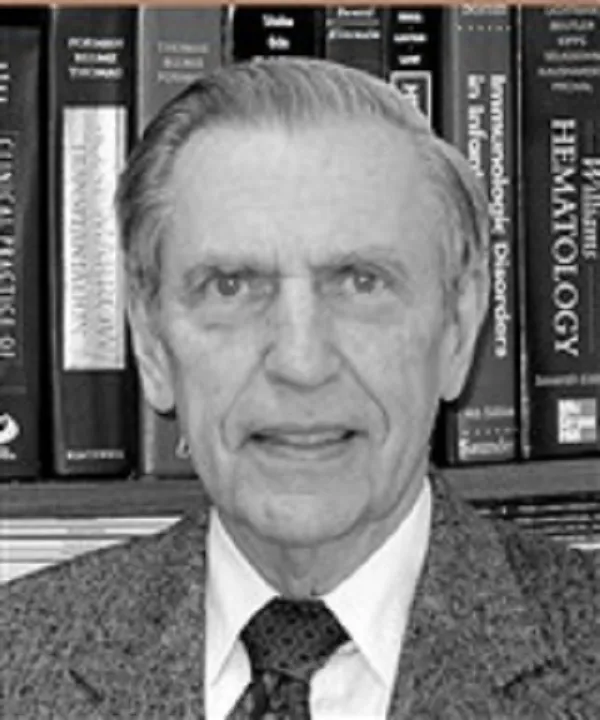
Emeritus Professor, UCLA
A career built at the intersection of blood science and transplantation
Dr. Lawrence Petz was one of the most distinguished transfusion medicine physicians of his generation. Before joining StemCyte as Chief Medical Officer, he spent decades shaping the field from two of the country's leading institutions.
At City of Hope National Medical Center, he served as Chairman of the Division of Medicine, Section Head of Hematology, and Director of Clinical and Experimental Immunology. He then moved to UCLA Medical Center, where he was Director of Transfusion Medicine and Professor of Pathology & Laboratory Medicine.
He authored the first bone marrow transplant textbook, Clinical Bone Marrow Transplantation (1983), along with all three editions of Clinical Practice of Transfusion Medicine and co-authored Immune Hemolytic Anemias. He published in the New England Journal of Medicine, JAMA, The Lancet, Blood, and hundreds more.
The AABB recognized him with its highest honors, including the Emily Cooley and Tibor Greenwalt Memorial Awards. The NHLBI granted him its Transfusion Medicine Academic Award. At StemCyte, he founded the annual International Symposium on Cord Blood Transplantation.
A hypothesis that changed everything
In 2007, a man named Timothy Ray Brown (later known as the "Berlin Patient") became the first person cured of HIV. His doctor had transplanted adult stem cells from a donor who carried a rare genetic mutation called CCR5-delta32, which prevents HIV from entering cells. The transplant cured both his leukemia and his HIV.
It was a landmark moment in medicine. But it was also nearly impossible to repeat. Adult stem cell transplants require a very close HLA match. Finding a donor who was both a close HLA match and carried two copies of the rare CCR5-delta32 mutation was extraordinarily unlikely. Only about 1% of people of European descent are homozygous for the mutation. In other populations, it is even rarer. This meant the Berlin Patient's cure was, for most of the world, out of reach.
Dr. Petz recognized something others had missed. Cord blood transplants require significantly less stringent HLA matching. That meant a relatively small inventory of cord blood units carrying the CCR5-delta32 mutation could provide matches for a much larger and more diverse group of patients.
The approach had another advantage: cord blood transplants carry a lower risk of graft-versus-host disease, the dangerous immune reaction that nearly killed the Berlin Patient. Cord blood was not just an alternative pathway. It was potentially a better one.
Screening 18,000 cord blood units to find the needle in the haystack
Dr. Petz and his team at StemCyte undertook an enormous screening effort. Working across StemCyte's own inventory and collaborating with cord blood banks at Duke University, MD Anderson, the University of Colorado, St. Louis, Barcelona, and Sydney, they tested approximately 18,000 cord blood units for the CCR5-delta32 mutation.
They identified 121 homozygous CCR5-delta32 units, roughly 0.7% among the primarily Caucasian units tested. DNA isolation and mutation analysis were conducted at City of Hope Medical Center. With projected additional screening of 25,000 more units, the goal was to build a registry of approximately 300 units.
That registry (which now contains more than 300 CCR5-delta32 homozygous cord blood units) exists nowhere else in the world. It became the critical infrastructure that made the IMPAACT P1107 study possible.
IMPAACT P1107: From hypothesis to NIH-backed clinical trial
In 2015, Dr. Petz's work became the foundation of a formal NIH-funded clinical study: IMPAACT P1107, a multi-center observational trial designed to track outcomes in people living with HIV who receive cord blood transplants carrying the CCR5-delta32 mutation.
The study was conducted by the International Maternal Pediatric Adolescent AIDS Clinical Trials (IMPAACT) Network, in collaboration with the AIDS Clinical Trials Group (ACTG), the Center for International Blood and Marrow Transplant Research (CIBMTR), and StemCyte. The study used StemCyte's pre-screened CCR5-delta32 cord blood units as the source material.
Dr. Yvonne Bryson, a distinguished professor at the David Geffen School of Medicine at UCLA, led the study. The transplant team at Weill Cornell Medicine, led by Drs. Jingmei Hsu and Koen Van Besien, performed the procedure. Deborah Persaud at Johns Hopkins University led the virological analysis. Dr. Petz served as a collaborator and co-author throughout.
The "New York Patient"
In 2013, a middle-aged woman of mixed-race ancestry in New York was diagnosed with HIV-1. She began antiretroviral therapy and achieved viral suppression. Four years later, in 2017, she developed acute myeloid leukemia (AML), a life-threatening blood cancer.
She needed a stem cell transplant to treat her cancer. But she also had HIV. The IMPAACT P1107 team saw an opportunity: could they treat both diseases at once?
The team identified a CCR5-delta32 homozygous cord blood unit from StemCyte's pre-screened registry. It was a 5/8 HLA match, partial by adult donor standards, but sufficient for a cord blood transplant. To provide a bridge while the cord blood cells engrafted, they combined it with haploidentical stem cells from one of her relatives.
In August 2017, at Weill Cornell Medicine in New York, she received the transplant. Her neutrophils engrafted by day 10. By day 100, her immune system had been fully reconstituted by the CCR5-delta32 cord blood cells. Her leukemia was in complete remission. And her HIV remained undetectable.
From transplant to remission
A landmark outcome
The New York Patient's results, as published in Cell, demonstrated what Dr. Petz had hypothesized a decade earlier: cord blood carrying the CCR5-delta32 mutation could achieve HIV remission, and possibly cure.
Correlative viral, immunological, and latent reservoir studies were consistent with the elimination of HIV-1 from her blood. Her cells were tested in the laboratory and found to be resistant to HIV. No replication-competent proviral reservoirs were detected post-transplant while off antiretroviral therapy. Antiretroviral drugs were confirmed absent from her blood plasma, verifying true ART-free remission.
Notably, she did not experience graft-versus-host disease, the dangerous immune complication that had severely affected the Berlin Patient. This supported Dr. Petz's reasoning that cord blood's inherently lower immunological risk made it a more practical source for this type of transplant.
Cord blood opened the door for everyone
Before this case, every person who had achieved HIV remission through stem cell transplantation was a man who received adult donor cells. This required near-perfect HLA matching from a donor pool that is overwhelmingly white. The approach was functionally unavailable to most of the world's HIV-positive population.
In the United States, only 28% of people living with HIV are Caucasian. The CCR5-delta32 mutation is found almost exclusively in people of European descent. Dr. Petz's insight (that cord blood's more flexible matching requirements could bypass these limitations) made a cure pathway available to patients who had none.
As the study authors wrote in Cell: cord blood-based cell therapy and CCR5-targeted approaches could serve as a model for future efforts to cure HIV in a broader and more diverse population of people living with the virus.
Sources
- Hsu J, Van Besien K, Glesby MJ, et al. HIV-1 remission and possible cure in a woman after haplo-cord blood transplant. Cell. 2023;186(6):1115–1126.e8. doi:10.1016/j.cell.2023.02.030
- Petz LD, Redei I, Bryson Y, et al. Hematopoietic cell transplantation with cord blood for cure of HIV infections. Biol Blood Marrow Transplant. 2013;19(3):393–397.
- Petz LD, Burnett JC, Li H, et al. Progress toward curing HIV infection with hematopoietic cell transplantation. Stem Cells Cloning. 2015;8:109–116. doi:10.2147/SCCAA.S56050
- Hsu J, Glesby M, Shore TB, et al. CCR5 delta32 cord & haploidentical grafts: allogeneic stem cell transplant for HIV+/AML patient: a case report from the IMPAACT P1107 observational study. Blood. 2018;132(Supplement 1):2184.
- IMPAACT P1107. Cord Blood Transplantation with CCR5delta32 Donor Cells. ClinicalTrials.gov Identifier: NCT02140944
- UCLA Health. UCLA Health at CROI: Presenting the case of a woman with HIV-1 in remission. February 15, 2022.
- World Health Organization. First case of HIV cure in a woman after stem cell transplantation reported at CROI-2022. March 24, 2022.
Learn more about StemCyte's story
From a California lab in 1997 to 2,300+ transplants in 40 countries.
Read our full story